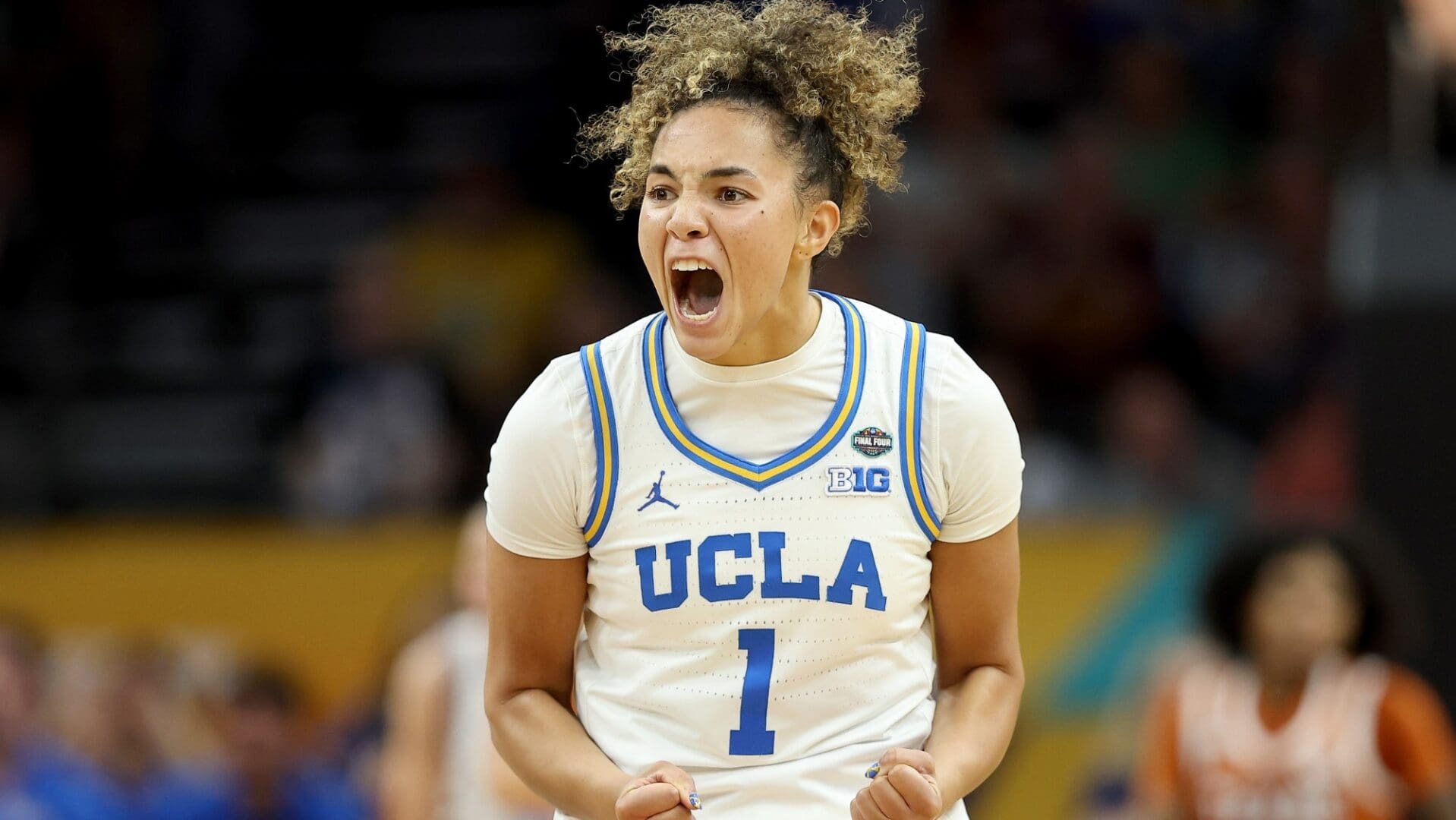
UCLA Women Win Their First Basketball National Championship
The statement win delivered Sunday by the UCLA Bruins women’s basketball wasn’t just a national championship, it was a declaration that the balance of power in women’s college basketball may finally be shifting. In dismantling the South Carolina Gamecocks women’s basketball 79–51 on the sport’s biggest stage, UCLA didn’t just win; it made a point.
For years, the conversation around women’s college basketball has centered on dynasties. South Carolina, under Dawn Staley, has been the gold standard—physical, deep, relentless, and nearly unbeatable in big moments. But what unfolded in the 2026 national championship game in Phoenix wasn’t just an upset. It was a dismantling of that hierarchy.
From the opening tip, UCLA looked like the more composed, more confident, and frankly, more complete team. They never trailed. They dictated tempo. And by the time the third quarter ended—with the Bruins leading by nearly 30—the outcome was no longer in doubt.
This wasn’t supposed to happen like this.
South Carolina entered the game battle-tested, riding years of dominance and fresh off another Final Four win. UCLA, meanwhile, was still shaking off the narrative of being “new” to this stage, even after a 37–1 season. But what Sunday proved is that experience doesn’t always beat evolution.
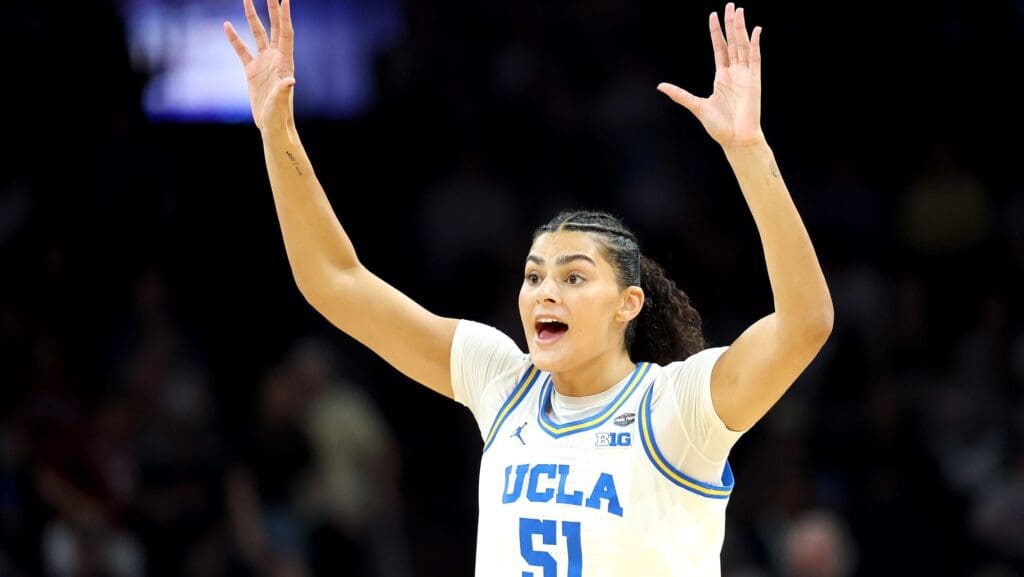
Because what UCLA showcased was the modern blueprint for championship basketball: versatility, spacing, defensive discipline, and—most importantly—selflessness.
All five starters scored in double figures. That stat alone tells the story. There was no overreliance on a single superstar, no stagnation offensively. Instead, the Bruins played like a team that understood exactly who they were. Gabriela Jaquez led the way with 21 points and filled the stat sheet, while Lauren Betts anchored the paint with a dominant double-double performance.
And then there was the defense.
Holding a South Carolina Gamecocks women’s basketball team—one known for its physicality and offensive efficiency—to just 29% shooting is more than impressive; it’s historic-level disruption. UCLA didn’t just contest shots; they erased options. Passing lanes disappeared. Driving angles closed. South Carolina looked, for perhaps the first time in years, unsure.
That’s where this game becomes bigger than one night.
For nearly a decade, South Carolina—and programs like UConn—have defined the ceiling of the sport. The question entering this tournament was whether anyone could truly challenge that dominance over 40 minutes. UCLA didn’t just answer that question. They flipped it entirely.
Now the question is: who’s next?
Because this victory signals something deeper than a championship banner. It signals parity—or at least the beginning of it.
UCLA’s rise wasn’t overnight. Under head coach Cori Close, the Bruins have been building steadily for over a decade, enduring near-misses, criticism, and the frustration of being “close but not quite.” Sunday was the payoff for patience in a college sports era that rarely rewards it.
And that’s what makes this win even more significant.
In a time where the transfer portal and instant turnarounds dominate headlines, UCLA proved that culture still matters. Development still matters. Continuity still matters.
It’s also worth noting how this impacts the broader perception of the women’s game. For years, critics have argued that the sport lacks parity—that too few teams have a realistic shot at the title. But UCLA’s emphatic victory over one of the sport’s most dominant programs challenges that narrative.
Not only did they win—they made it look easy.
And that’s the most dangerous part.
Because if this had been a buzzer-beater, a lucky break, or a one-possession game, it could be dismissed as a moment. But a 28-point blowout? That’s a message.
t says UCLA isn’t just here—they’re here to stay.
It also puts pressure on programs like South Carolina to evolve. Dynasties don’t end overnight, but they do face inflection points. This loss, on this stage, could be one of them. Dawn Staley has built one of the most respected programs in the country, and there’s no reason to believe the Gamecocks won’t respond. But the gap has clearly narrowed.
Or perhaps, it’s already gone.
In the end, this championship belongs to UCLA. It belongs to a group of players who refused to be intimidated by the moment, who played with poise beyond their experience, and who executed at a level rarely seen in a title game.
But it also belongs to the sport.
Because games like this—dominant, unexpected, and transformative—are what push women’s college basketball forward.
And on Sunday, in front of the entire country, UCLA didn’t just win a national championship.
They changed the conversation.
Michael J. Wilson-Daily Waiver
Email: dailywaiver@gmail.com Instagram: @dailywaiver Tik-Tok: @dailywaiver