
Big Ten is about Conference Supremacy in College Athletics
The conversation about conference supremacy in college athletics often defaults to football dominance or March Madness success, but the truth is broader—and right now, no league can match the all-around excellence, reach, and institutional power of the Big Ten Conference.
From coast to coast, academically elite and athletically dominant, the Big Ten has positioned itself as the gold standard in modern college sports. It’s not just about winning—it’s about doing everything at the highest level.
Big Ten Football
Start with football, the engine that drives the entire college athletics machine. The Big Ten has become a juggernaut. Programs like Michigan Wolverines football and Ohio State Buckeyes football consistently compete for national championships, while Penn State Nittany Lions football and Oregon Ducks football (now part of the expanded conference) add even more firepower. With the additions of West Coast powers like USC Trojans football and UCLA Bruins football, the conference has transformed into a truly national brand.
“This league has everything,” one anonymous Power Four coach said. “Elite tradition, elite recruiting, elite facilities—it’s the NFL pipeline of college football.”
And that’s not hyperbole. Year after year, Big Ten programs flood the NFL Draft with talent. Coaches across the country openly acknowledge the physicality and development players experience in the conference. “If you can start in the Big Ten,” one NFL scout noted, “you’re ready for Sundays. It’s that simple.”
But what separates the Big Ten from its peers is that its dominance doesn’t stop at football.
Men’s and Women’s Basketball
Men’s basketball is just as competitive, if not deeper. Programs like Purdue Boilermakers men’s basketball, Michigan State Spartans men’s basketball, and Indiana Hoosiers men’s basketball consistently rank among the nation’s best, while emerging powers like Illinois Fighting Illini men’s basketball and Wisconsin Badgers men’s basketball ensure there are no easy nights.
“The Big Ten is a grind,” said a veteran head coach. “There’s no off night. You win here, you’ve earned it.”
That week-to-week gauntlet prepares teams for postseason success. While critics point to national title droughts in recent years, the reality is the Big Ten routinely sends a large number of teams to the NCAA Men’s Basketball Tournament and consistently places teams in the second weekend and beyond. Depth matters—and no conference matches it.
Then there’s women’s athletics, where the Big Ten continues to surge. Volleyball is perhaps the clearest example. Programs like Nebraska Cornhuskers women’s volleyball and Wisconsin Badgers women’s volleyball have turned the conference into the epicenter of the sport. Massive crowds, national titles, and unmatched television ratings have made Big Ten volleyball a national phenomenon.
“Nowhere else do you see this level of investment and fan support,” said one athletic director. “The Big Ten treats every sport like it matters—because it does.”
That philosophy extends across the board. Wrestling, hockey, soccer, track and field—the Big Ten is consistently in contention for national championships. The conference’s commitment to broad-based excellence is unmatched, fueled by massive athletic budgets and institutional alignment.
Academics
And that brings up another key point: academics.
Unlike some conferences that lean heavily on athletic identity alone, the Big Ten boasts some of the most prestigious universities in the world. Schools like University of Michigan, Northwestern University, and University of California, Los Angeles combine elite academics with top-tier athletics. That balance is a major selling point for recruits and a defining feature of the conference.
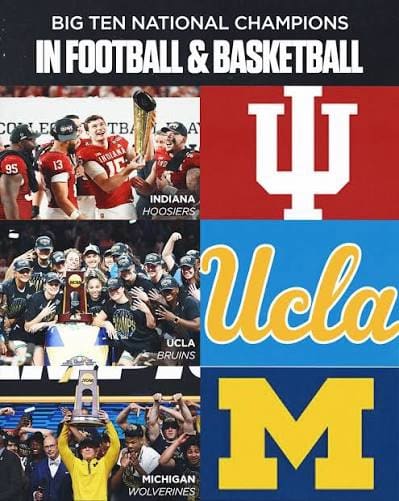
“The Big Ten is different,” one university president said. “It’s not just about winning games—it’s about building leaders. That’s what makes this conference special.”
Finances and Geography
Financially, the Big Ten stands alone. Its media deals, particularly with networks like Fox Sports, CBS Sports, and NBC Sports, have created unprecedented revenue streams. The creation and continued success of the Big Ten Networkrevolutionized how conferences approach media rights.
That financial power translates directly into facilities, coaching salaries, and athlete resources. Simply put, Big Ten schools have the infrastructure to compete at the highest level in every sport.
Geography also plays a role. With teams stretching from New Jersey to California, the Big Ten now operates in every major media market in the country. That reach boosts recruiting, exposure, and influence in ways no other conference can match.
Critics may argue for the football dominance of the SEC or the historical basketball success of other leagues, but no conference checks every box like the Big Ten. It is elite in football, deep in basketball, dominant in Olympic sports, academically prestigious, and financially unmatched.
Final Thoughts
“This is the premier conference in college athletics,” one longtime administrator said. “Top to bottom, there’s nothing else like it.”
And that’s the reality. In an era where college sports are rapidly evolving—driven by NIL, conference realignment, and media rights—the Big Ten hasn’t just adapted. It has set the standard.
The best conference in college athletics isn’t just about who wins the most titles. It’s about who does everything the best.
Right now, that conference is the Big Ten.
Michael J. Wilson-The Daily Waiver
Email: Dailywaiver@gmail.com Instagram: @Dailywaiver Tik-Tok: @Dailywaiver