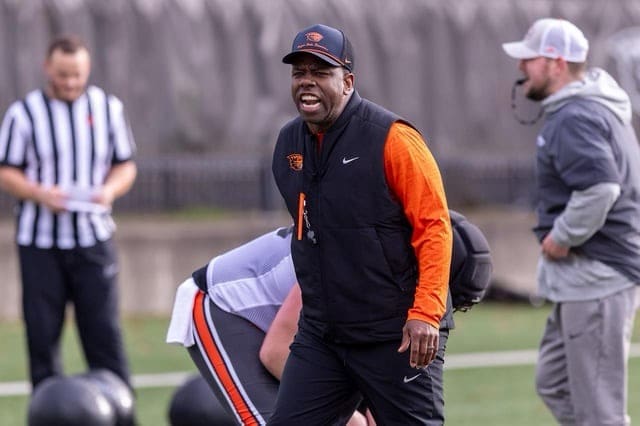
JaMarcus Shephard: A Calculated Gamble for Oregon State
When JaMarcus Shephard was introduced as the new leader of the Oregon State Beavers football program in late 2025, the hire didn’t come with the typical head coaching résumé. No prior time running a program. No established track record as the face of a rebuild. But what it did come with—arguably more important in today’s college football landscape—was energy, offensive innovation, and a reputation for developing elite talent.
That combination is exactly why Oregon State made the move, and it’s also why expectations for Shephard’s tenure should be both optimistic and grounded in reality.
Modern Offense and Energy
If there’s one thing that defines Shephard’s coaching career, it’s offense—specifically, explosive passing attacks. From his time at Purdue to Washington and most recently Alabama, his units consistently produced high-level aerial production and NFL-caliber wide receivers. At Washington, his passing offense ranked among the nation’s best, and his receiver room featured future pros like Rome Odunze and Ja’Lynn Polk.
That matters because Oregon State, even during its best years under Jonathan Smith, was more balanced than explosive. Shephard represents a philosophical shift. He’s not coming to maintain; he’s coming to modernize.
In his own words, Shephard emphasized building a culture of “toughness, integrity, and relentless effort.” That’s standard coach-speak on the surface, but paired with his track record, it suggests a program that will aim to blend physical Pac-12 identity with high-octane offense.
More importantly, Shephard brings juice. Athletic director Scott Barnes highlighted his “character” and ability to connect with players—an increasingly critical trait in the NIL and transfer portal era. This is not a small detail. Programs don’t rebuild anymore—they retool on the fly. Relationships are currency, and Shephard has built a reputation as a strong recruiter and player developer.
A Program in Need of Direction
Let’s not sugarcoat the situation Shephard is walking into. Oregon State is coming off a disastrous 2–10 season and a coaching change after Trent Bray’s short tenure imploded. This is not a program on stable footing—it’s one searching for identity.
Add in the broader uncertainty around the restructured Pac-12, and the job becomes even more complex. Oregon State is no longer competing in the same ecosystem it was even a few years ago. Resources, scheduling, recruiting pipelines—all of it is shifting.
That’s why Shephard’s background matters. He’s coached at multiple stops across the country, including the Pacific Northwest, and has been part of winning cultures at Washington and Alabama. He understands what a successful program looks like behind the scenes.
But understanding it and building it are two very different challenges.
The Staff: Quiet Importance
One of the more telling aspects of Shephard’s early tenure is his staff construction. Bringing in experienced coordinators like Mike MacIntyre on defense signals that he’s not trying to do everything himself. That’s a smart move for a first-time head coach.
Too often, new head coaches fail because they try to replicate their coordinator identity at the expense of managing the entire program. Shephard appears to be avoiding that trap by delegating and surrounding himself with experience.
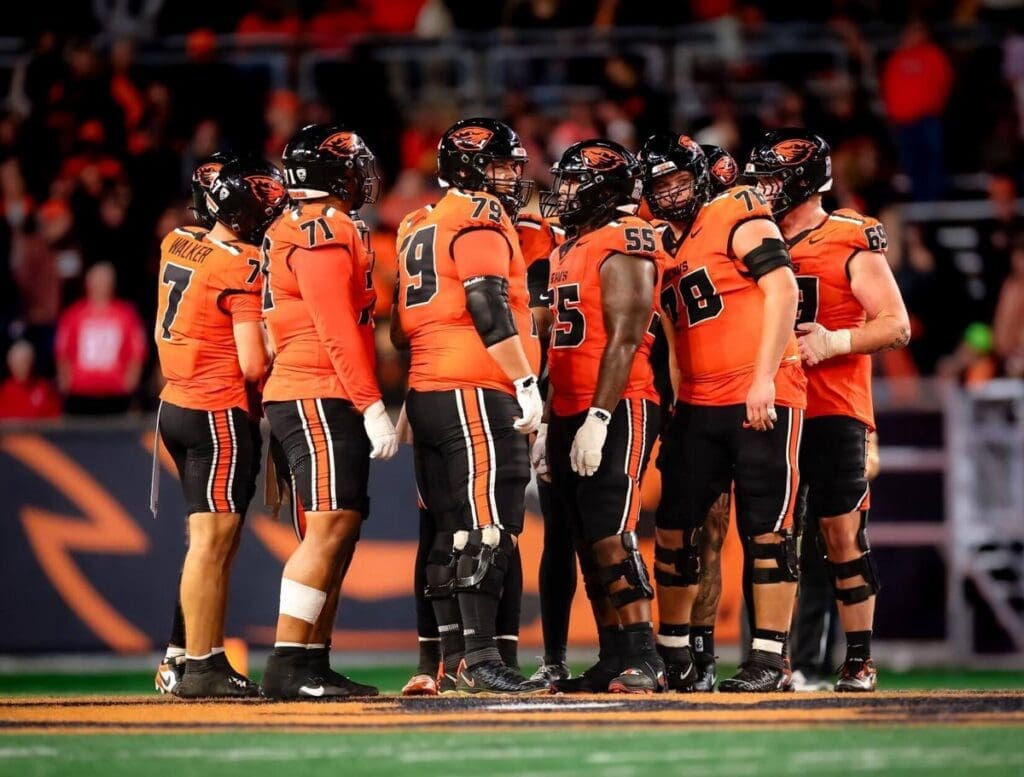
If Oregon State improves quickly, don’t be surprised if it’s because the staff is greater than the sum of its parts.
Expectations and Reality
Here’s where perspective matters. Fans may want a quick turnaround, but history suggests patience is required.
Year one under Shephard should be about establishing identity, not chasing championships. A bowl game would be a success. Even a 5–7 season with visible progress—especially on offense—would signal the program is moving in the right direction.
Why? Because roster turnover is inevitable. New schemes, new culture, and likely heavy use of the transfer portal mean 2026 will be a transition year.
Expect flashes, not consistency.
Years 2-3: The Real Evaluation Starts Hitting
By years two and three, the conversation changes. That’s when Shephard’s recruiting classes start to take shape, and his system should be fully implemented.

At that point, expectations should rise to:
- Consistent bowl appearances
- A top-half finish in the Pac-12
- Noticeable offensive identity
If those benchmarks aren’t met by year three, then questions become fair. But until then, judging Shephard too harshly would ignore the reality of what he inherited.
What This Could Become
The upside is intriguing. If Shephard successfully translates his offensive success into a head coaching role, Oregon State could become one of the more dangerous “sleepers” in college football.
Think of programs that aren’t blue bloods but can beat anyone on a given Saturday because of scheme and player development. That’s the blueprint.
His history of producing NFL receivers and high-level passing attacks suggests Oregon State could become a destination for offensive skill talent—something that hasn’t consistently been the case.
But that ceiling depends on one key factor: recruiting.
Recruiting and Retention
Ultimately, Shephard will be judged not by his playbook but by his roster.
Will he keep top regional talent from leaving the Pacific Northwest?
Can he win transfer portal battles against bigger programs?
Can he develop three-star players into NFL prospects?
Those are the questions that will define his tenure.
The good news is that his background—especially at Washington and Alabama—gives him credibility with recruits. The challenge is translating that into wins at a program without the same resources.
Final Thought
Hiring JaMarcus Shephard was a calculated gamble by Oregon State—but it’s the kind of gamble programs in transition have to make.
He brings energy, offensive innovation, and a track record of developing talent. What he doesn’t bring is experience running a program, and that’s where the uncertainty lies.
Reasonable expectations? Patience in year one, progress in year two, and real results by year three.
If he hits that timeline, Oregon State won’t just be relevant again—it could be one of the more interesting rebuild stories in college football.
Michael J. Wilson-The Daily Waiver
Email: Dailywaiver@gmail.com Instagram: @Dailywaiver Tik-Tok: @Dailywaiver