
Conference Realignment vs. The Brendan Sorsby Case: Which Has Had the Bigger Impact on College Athletics?
College athletics has undergone more change in the past five years than at any other point in NCAA history. Name, image and likeness (NIL), the transfer portal, revenue sharing, athlete employment debates, conference realignment, and now the Brendan Sorsby eligibility controversy have all challenged the traditional structure of college sports.
The latest controversy involving Texas Tech quarterback Brendan Sorsby has certainly become one of the most talked-about stories of 2026. After a Texas court granted Sorsby a temporary injunction that restored his eligibility despite NCAA gambling violations, the decision sparked outrage throughout the Big 12. Conference officials, athletic directors, legal experts, and politicians have become involved as the NCAA appeals the ruling and the conference explores its options.
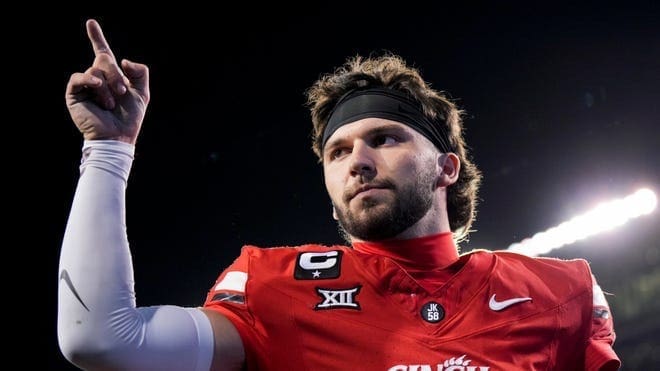
The case is significant because Sorsby admitted to placing sports wagers, including bets involving his former team, Indiana. The NCAA ruled him permanently ineligible before a judge restored his eligibility pending further legal proceedings. The fallout has been dramatic, with reports of serious discussions among Big 12 schools regarding potential responses and concerns about the integrity of competition.
Yet despite the headlines and controversy, conference realignment remains the single most impactful force in modern college athletics.

The Sorsby situation may ultimately become a landmark legal case, but conference realignment has fundamentally reshaped the entire landscape of college sports.
The easiest way to understand the difference is scale.
The Sorsby case affects one athlete, one conference, and potentially NCAA enforcement powers moving forward. If the courts ultimately side with Sorsby, it could weaken the NCAA’s authority to impose eligibility penalties and encourage future legal challenges. That would be a meaningful development. It may even become a precedent for athletes seeking court intervention against NCAA rulings.
Conference realignment, however, has impacted every athlete, every coach, every conference, and every television contract in college sports.
The collapse of the Pac-12 alone changed the future of dozens of athletic programs. Historic rivalries disappeared. Travel costs exploded. Student-athletes now routinely travel across multiple time zones for conference games. Schools changed leagues not because of geography or tradition, but because of media-rights revenue opportunities. Television money became the driving force behind the modern structure of college athletics.

Look at the Big Ten.
The additions of USC, UCLA, Oregon, and Washington dramatically expanded the conference’s national footprint and television reach. The SEC’s additions of Texas and Oklahoma transformed the balance of power in college football. The Big 12 rebuilt itself after losing flagship brands while the ACC continues to face uncertainty regarding its future membership. Every major decision being made in college athletics today is influenced by conference alignment and media rights.
No single legal case can match that level of impact.
Even if Sorsby wins every legal battle ahead, the broader effects will likely center on NCAA enforcement. The organization could lose additional authority in court, which would certainly matter. But the NCAA has already seen its power reduced through NIL lawsuits, transfer portal litigation, and court decisions such as Alston. The Sorsby case would simply represent another step in an ongoing trend.
Conference realignment, on the other hand, changed the financial structure of college athletics.
Entire athletic departments now depend on conference affiliation for survival. Schools left behind during realignment have suffered major revenue losses. Recruiting strategies have changed. Scheduling models have changed. Television windows have changed. Even the College Football Playoff structure has changed because of conference membership considerations.
Those consequences affect thousands of athletes every year.
There is also a historical component to consider.
When future generations look back at the 2020s, they will likely view conference realignment as the defining story of the era. The death of the Pac-12 as a power conference, the rise of the super-conference model, and the increasing concentration of revenue among the SEC and Big Ten will be remembered as transformational moments.
The Brendan Sorsby case could become an important chapter within that story, but it is unlikely to become the story itself.
That does not diminish the significance of what is happening today.
The reaction throughout the Big 12 demonstrates how seriously people inside college athletics view gambling violations. Several administrators have expressed concern that allowing Sorsby to play after betting violations could undermine confidence in NCAA enforcement and competitive integrity. The NCAA’s appeal and the conference’s ongoing deliberations show that the issue is far from resolved.
What makes the case unique is that it highlights another growing trend in college athletics: governance through the courtroom.
Increasingly, major decisions are no longer being settled by the NCAA or conferences. They are being decided by judges. That reality has become one of the defining features of modern college sports.
In that sense, the Sorsby case may symbolize the future.
But conference realignment created the environment that made many of these battles possible in the first place. The pursuit of television revenue fueled conference expansion, which increased financial stakes, which increased legal challenges, which ultimately weakened traditional NCAA authority. The two issues are connected, but one clearly has had a broader impact than the other.
The verdict is straightforward.
The Brendan Sorsby situation is one of the most important college athletics stories of 2026. It raises legitimate questions about gambling, eligibility, conference authority, and the NCAA’s future. It may establish legal precedents that affect future athletes and institutions.
However, conference realignment remains the bigger force.
Realignment has altered the financial foundation, competitive structure, geographic makeup, media landscape, and future direction of college athletics. It changed where schools compete, how much money they earn, and how the entire industry operates.
The Sorsby case may influence the rules.
Conference realignment changed the game itself.
Michael J. Wilson-The Daily Waiver
Email: Dailywaiver@gmail.com Instagram: @Dailywaiver Tik-Tok: @Dailywaiver