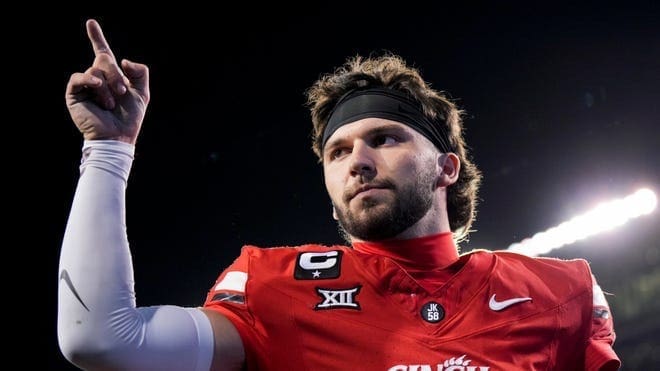
Brendan Sorsby Could be Just the Beginning for College Sports
The story of Brendan Sorsby isn’t just another off-field controversy—it’s a warning shot for the entire ecosystem of college football. What makes this situation different isn’t just the volume of bets or the NCAA investigation. It’s the timing, the visibility, and what it reveals about the modern intersection of athletes, money, and gambling in a post-legalization era.
Sorsby, a high-profile quarterback and transfer portal star, is under investigation for placing “thousands of bets” through a gambling app, actions that directly violate NCAA rules prohibiting athletes from wagering on sports. While there’s no indication he tried to influence outcomes, the sheer scale of activity—and his status as a potential NFL prospect—has turned this into what many are calling the first true major gambling scandal of the NIL era.
“This is the biggest modern gambling scandal college football has seen,” one analyst noted, highlighting how the combination of star power and money has changed the stakes entirely.
The NIL Era Meets the Betting Boom
To understand why this matters, you have to look at the broader context. Since the 2018 legalization wave, sports betting has exploded across the United States. It’s now legal in most states, heavily advertised, and embedded into sports media itself.
At the same time, college athletes are no longer amateurs in the traditional sense. NIL deals have turned top players into six- and seven-figure earners. Sorsby himself was reportedly in line to make millions through NIL opportunities.

That combination—easy access to betting platforms and newfound financial freedom—creates a dangerous gray area. Athletes are no longer insulated from the same temptations as the fans watching them.
Texas Tech head coach Joey McGuire addressed the human side of the issue, saying, “We support his decision… our primary focus is on him as a person.”
That quote is telling. This is no longer just about rule-breaking—it’s about addiction, access, and a system that may not be equipped to handle either.
A System Built for a Different Era
The NCAA’s gambling rules are clear: no betting on sports, period. Violations can result in anything from partial suspensions to permanent loss of eligibility.
But here’s the problem: those rules were designed in an era when gambling was largely underground. Today, betting apps are a tap away. Commercials run during games. Odds scroll across broadcasts. The line between “fan” and “participant” has never been thinner.
Sorsby’s case exposes a fundamental disconnect. College football is operating in a modern gambling environment with outdated enforcement models.
And it’s not an isolated incident. Recent cases across college athletics—including point-shaving scandals and eligibility bans—suggest a growing trend that the NCAA can’t ignore.
Integrity vs Reality
The biggest concern moving forward isn’t just that players are betting—it’s the potential erosion of trust in the sport itself.
Even though there’s no evidence Sorsby altered outcomes, perception matters. Once fans begin to question whether games are “clean,” the entire product is at risk.
That’s why the NCAA has drawn such a hard line. But enforcement alone won’t solve the problem.

Because the reality is this: college football is now deeply entangled with gambling culture. From sponsorships to media deals, the sport benefits financially from the same ecosystem it’s trying to keep players away from.
That contradiction is becoming harder to defend.
Mental Health Can’t Be Ignored
One of the most important aspects of this story is that Sorsby has entered treatment for a gambling addiction.
That shifts the conversation. This isn’t just about discipline—it’s about prevention and support.
If college athletes are going to operate in a world saturated with betting, then universities and governing bodies need to invest in education and mental health resources at a much higher level.
Because if a high-profile quarterback with millions on the line can fall into this pattern, it’s naive to think others won’t.
What Comes Next
Sorsby’s case is likely to trigger changes—whether the NCAA wants them or not.
First, expect stricter monitoring. Betting companies already flag suspicious activity, and partnerships between regulators and leagues will only grow.
Second, education programs will need to evolve. Telling players “don’t bet” isn’t enough anymore. They need to understand the risks, the rules, and the consequences in a real, practical way.
Third—and most controversially—there may be renewed debate about whether the NCAA’s blanket ban is sustainable in its current form.
Because as long as gambling is everywhere, total prohibition for athletes may become increasingly difficult to enforce.
The Bigger Picture
What Brendan Sorsby represents is not just a scandal, but a turning point.
College football has spent decades protecting its image of competitive purity. But in 2026, that image is being tested by forces the sport can’t fully control—money, technology, and human behavior.
The question isn’t whether gambling will continue to impact college football. It will.
The real question is whether the sport can adapt fast enough to protect its integrity without ignoring the reality its athletes live in.
Because if it can’t, Sorsby won’t be remembered as the exception.
He’ll be remembered as the beginning.
Michael J. Wilson-The Daily Waiver
Email: Dailywaiver@gmail.com Instagram: @Dailywaiver Tik-Tok: @Dailywaiver