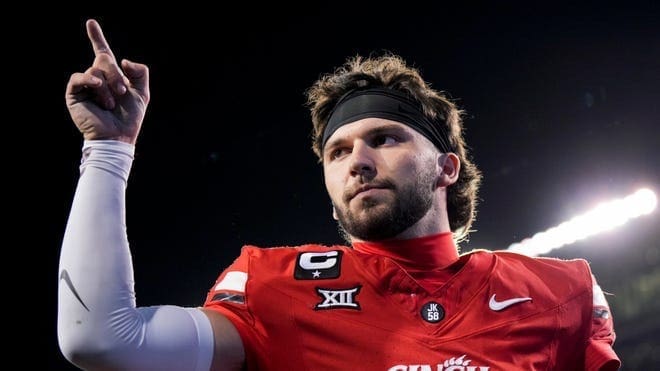
Did Brendan Sorsby Take the Easy Way Out?
When the news broke that Texas Tech quarterback Brendan Sorsby would forgo the 2026 college football season and enter the NFL Supplemental Draft, reactions were immediate. Some viewed it as a smart business decision. Others saw it as an admission that the battle for eligibility had become unwinnable. The larger question, however, remains: did Sorsby take the easy way out of the biggest gambling scandal college football has faced in years?
My answer is yes — and no.
From a football standpoint, entering the supplemental draft was undoubtedly the easiest path available. From a personal standpoint, however, it may have been the most realistic one.
Sorsby’s situation was unlike anything college athletics has experienced in the NIL era. The quarterback admitted to placing thousands of sports wagers during his college career, including bets involving Indiana football while he was a member of the program. NCAA rules have historically treated wagering on one’s own team as among the most serious violations possible, resulting in permanent ineligibility.
The controversy exploded when Texas Tech stood behind Sorsby after he completed treatment for a gambling addiction and sought reinstatement. A Texas judge granted him a temporary injunction that would have allowed him to play in 2026 after serving a two-game suspension. The NCAA immediately appealed, while the Big 12 Conference launched its own legal efforts to maintain authority over eligibility standards.
At that point, Sorsby had a choice.
He could continue fighting through years of litigation and public scrutiny.
Or he could walk away from college football entirely.
He chose the latter.
Texas Tech Board Chairman Cody Campbell explained the decision this week.
“This decision was made with Brendan and his family and is purely an output of practical analysis of the situation.” (CBS Sports)
Campbell also noted that there was “no practical way” to resolve the legal disputes before the June 22 deadline required for supplemental draft eligibility.
Those comments are understandable.
But they also reveal the reality.
The supplemental draft offered Sorsby an escape hatch.
Instead of spending the next several months defending his eligibility, answering questions about gambling, and becoming the face of an NCAA legal war, he can now focus on convincing NFL teams that his talent outweighs the baggage.
That is unquestionably easier.
Had Sorsby remained in college football, every road game would have become a circus. Every press conference would have included questions about betting. Every opposing coach would have used his presence as evidence that the NCAA had lost control of enforcement.
The pressure would have been enormous.
By entering the supplemental draft, he avoids all of it.
The NCAA avoids a potentially damaging court loss. The Big 12 avoids a conference-wide civil war. Texas Tech avoids possible sanctions. And Sorsby avoids spending another season under a microscope.
That sounds like the easy way out.
Yet calling it a complete escape ignores an important fact: the NFL is not offering forgiveness.
NFL teams still must decide whether to invest draft capital in a player whose gambling history is unprecedented for a quarterback prospect. Some analysts believe Sorsby possesses first-round talent, but talent alone does not erase concerns about judgment and decision-making.
His attorney, Jeffrey Kessler, argued that the public has misunderstood aspects of the case.
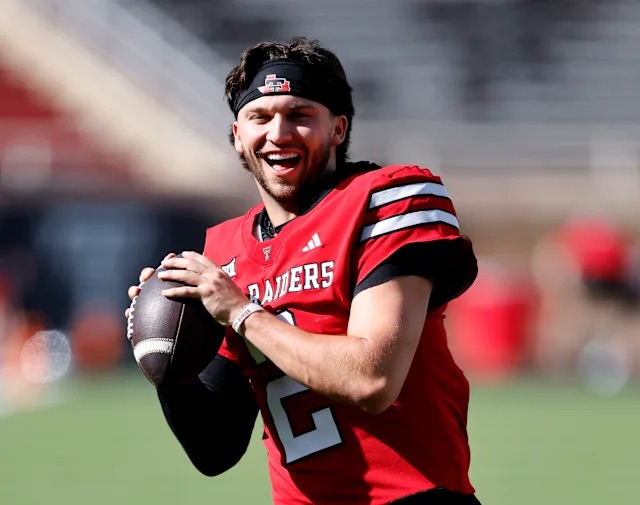
“He never did any betting to compromise the integrity of his team.” (Yahoo Sports)
That distinction matters.
There has been no public evidence that Sorsby altered games or attempted to affect outcomes. The allegations center on prohibited wagering behavior, not point-shaving or game-fixing.
That is why some NFL evaluators may ultimately decide the risk is worth taking.
Still, professional football will not be free of consequences.
Reports indicate NFL teams continue to scrutinize the gambling history carefully, and there is even speculation that league discipline could remain a possibility depending on future review.
In other words, Sorsby is not escaping accountability.
He is simply changing venues.
What bothers many college football observers is the precedent.
For months, supporters argued that Sorsby deserved another chance because he sought treatment and acknowledged his addiction issues. Critics argued that betting on your own team crosses a line that cannot be ignored.
Now the debate ends without a definitive answer.
There is no final court ruling, no NCAA victory, or no Sorsby comeback season.
Everyone just moves on.
That feels unsatisfying because college football never received a conclusion. The sport spent months debating integrity, addiction, punishment, and second chances, only for the central figure to leave before the argument was resolved.
Perhaps that is why so many fans feel Sorsby took the easy way out.
Not because entering the NFL will be easy.
Not because his reputation has been repaired.
But because the college football world never got the accountability debate it was expecting.
Ultimately, Sorsby’s decision was probably the correct one for his future. He faced a shrinking timeline, increasing legal uncertainty, and a chance to begin his professional career immediately. Few athletes in his position would have chosen differently.
Yet two things can be true at once.
The supplemental draft was the smartest business move available.
And it was also the easiest exit from a controversy that threatened to consume the entire 2026 college football season.
For better or worse, Brendan Sorsby has left the NCAA battlefield behind. Now the NFL must decide whether his arm talent is enough to overcome the gambling scandal that changed the course of his career.
Michael J. Wilson-The Daily Waiver
Email: Dailywaiver@gmail.com Instagram: @Dailywaiver Tik-Tok: @Dailywaiver