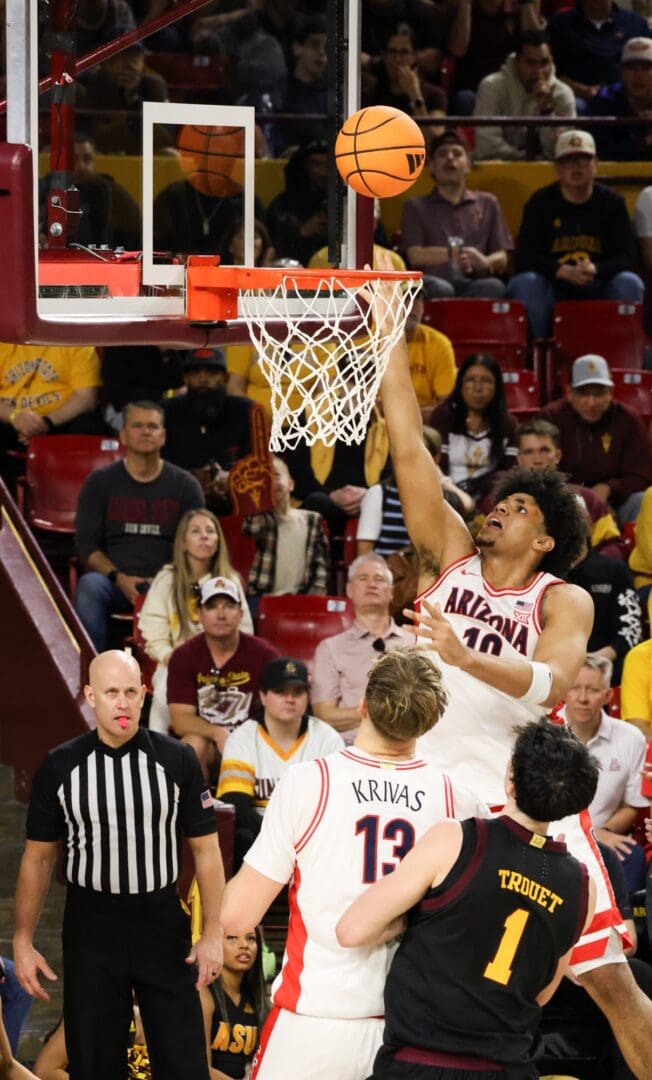
Koa Peat Should Return to the Arizona Wildcats
For most elite freshmen, the decision to leave for the NBA after one season is automatic. For Koa Peat, it shouldn’t be.
Peat should return to the University of Arizona for his sophomore season, and not because he isn’t talented enough for the NBA right now. He absolutely is. The 6-foot-8 forward already looks like an NBA body, already produced at a high level against elite competition, and already helped lead Arizona to a Final Four appearance in his freshman season. But returning to Tucson for one more year could be the difference between Peat becoming a solid NBA player and becoming a franchise cornerstone.
And honestly, they are right.
Peat’s freshman season was outstanding in many ways. He averaged 14.1 points, 5.6 rebounds, and 2.6 assists while helping Arizona reach heights the program had not seen in decades. He was physical, relentless, and fearless in big moments. Few freshmen in college basketball attacked the paint with more force or played with more toughness. He looked like a veteran at times.
But the NBA in 2026 is about versatility and spacing. That is where the concerns begin.
Scouts still question Peat’s perimeter shooting consistency, defensive flexibility, and overall offensive polish. At the NBA Draft Combine, those concerns became even louder after he struggled badly in shooting drills.
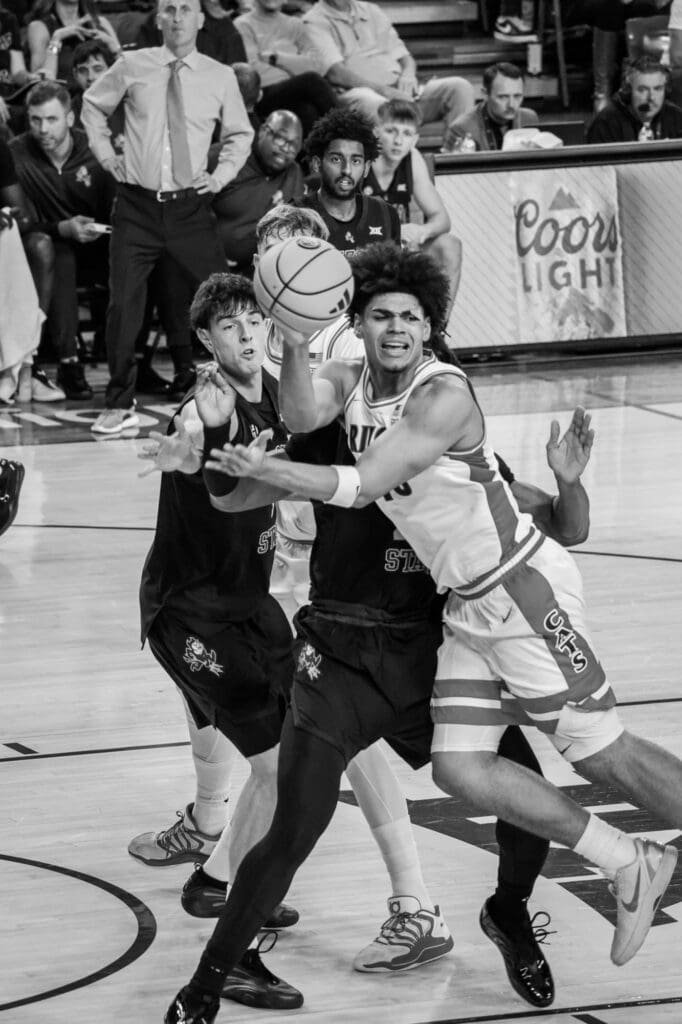
That does not mean Peat cannot become a star. In fact, it may mean the opposite.
Another year at Arizona could elevate him from “promising first-rounder” to legitimate top-five pick in 2027. Several analysts and NBA evaluators already believe exactly that. One report noted that teams view him as an “excellent candidate” to return to college because another year could dramatically improve his stock. Sports Illustrated also noted that Peat could benefit more than almost any projected non-lottery player by returning to school and developing his perimeter game.
That is the key point here.
There is a massive difference between being the No. 20 pick and the No. 4 pick. The money changes. The organizational investment changes. The opportunities change. Most importantly, the patience franchises give players changes. Lottery picks get development time. Mid-to-late first-rounders often get thrown into uncertain situations and are expected to figure things out immediately.
Peat does not need to rush.
College basketball has changed dramatically because of NIL money. Returning to school is no longer a financial sacrifice the way it once was. Reports have suggested that Peat could earn NIL compensation close to what he would make as a late first-round pick anyway. That changes the equation entirely.
In previous eras, staying in school meant risking millions. Now, it means betting on yourself while still getting paid.
And there is another factor: legacy.
If Peat returns, Arizona instantly becomes one of the favorites to reach the Final Four again. The Wildcats already have significant returning talent, including Ivan Kharchenkov and a highly regarded incoming group. But Peat is the centerpiece. He is the player who changes Arizona from “very good” to “national title contender.”
At Arizona, Peat has the chance to become one of the defining players in program history. That is not exaggeration. The Wildcats do not often get players of his caliber returning for a second season. Most elite recruits leave immediately. Staying would give him the opportunity to build something rare in modern college basketball.
And from a basketball perspective, another year under Tommy Lloyd could help Peat tremendously. Lloyd’s system clearly showcased Peat’s strengths as a playmaker and interior scorer. A second season would likely feature more offensive responsibility, more leadership opportunities, and more freedom to expand his perimeter game.

Imagine a sophomore Peat shooting consistently from deep while averaging 18 to 20 points per game on a preseason top-five team. Suddenly, NBA conversations look very different.
There is risk in returning, of course. Injury is always possible. Draft stock can stagnate. That is the danger every player faces. But Peat’s situation feels different because his weaknesses are so identifiable and fixable. He is not lacking athleticism or toughness. He simply needs refinement.
That is exactly the kind of player who benefits from another college season.
If Peat stays in the draft, he will still hear his name called in the first round. He will still have a real NBA future. But if he returns to Arizona, he has a chance to become something much bigger — a college basketball superstar, a top NBA prospect, and potentially one of the greatest Wildcats of the modern era.
For Koa Peat, waiting one more year could change everything.
Michael J. Wilson-The Daily Waiver
Email: Dailywaiver@gmail.com Instagram: @Dailywaiver Tik-Tok: @Dailywaiver