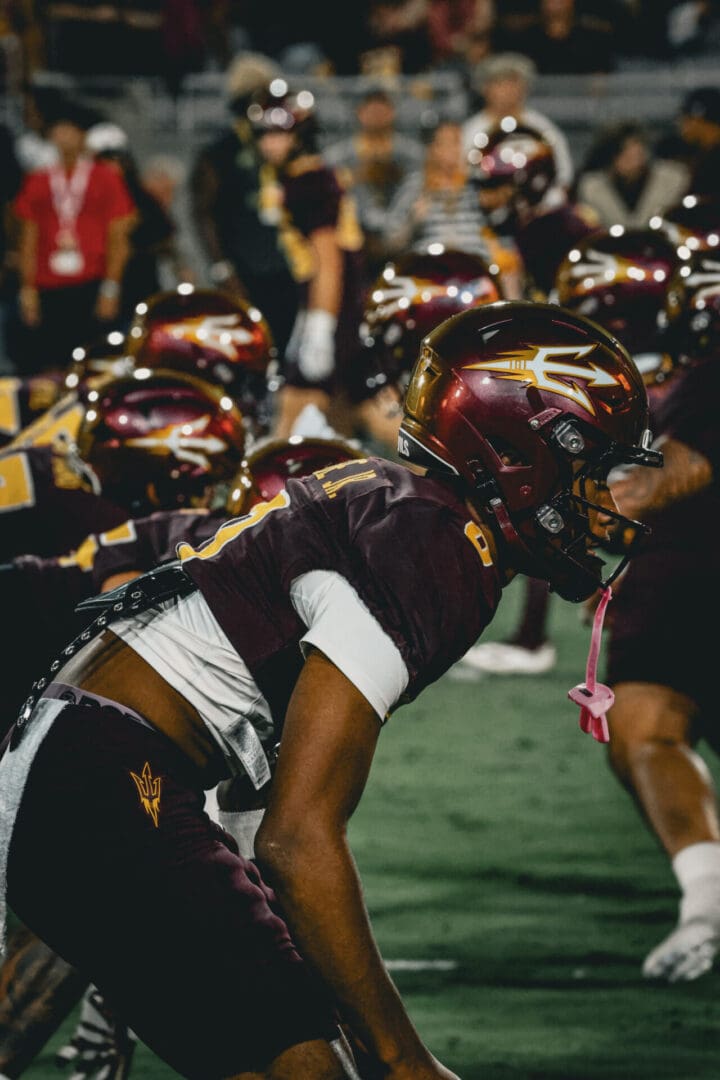
Spring Practice for Arizona State is Here
Spring practice for the Arizona State Sun Devils football ahead of the 2026–2027 season is far more than a routine set of workouts—it represents a defining checkpoint for a program trying to solidify its identity under head coach Kenny Dillingham. With roster turnover, transfer portal additions, and rising expectations in the Big 12, this spring is about establishing whether Arizona State can take the next step from rebuilding to contending.
A Program at a Crossroads
Arizona State enters spring practice with a sense of urgency. After navigating the early stages of Dillingham’s tenure, the Sun Devils are no longer simply developing—they are expected to compete. National projections already point to 2026 as a “massively consequential campaign,” with legitimate postseason aspirations on the table.

Spring practice, therefore, becomes the foundation for those expectations. It’s where schemes are refined, depth charts take shape, and leadership emerges. For a team that has experienced significant roster turnover, the importance of these weeks in Tempe cannot be overstated.
Roster Turnover
One of the defining storylines of Arizona State’s offseason has been its aggressive use of the transfer portal. Dillingham and his staff brought in a wave of new talent, including defensive reinforcements and skill-position players expected to contribute immediately.
Additions like cornerback Ashton Stamps, linebacker Owen Long, and running back Marquis Gillis highlight a clear strategy: reload quickly rather than rebuild slowly. These players will be heavily evaluated during spring practices as the coaching staff determines how quickly they can adapt to the system.
At the same time, the Sun Devils lost key contributors to the NFL and transfer portal, creating openings across the depth chart. That makes spring practice a proving ground not just for newcomers, but also for returning players stepping into larger roles.
Quarterback Competition and Offensive Identity
No position will be more closely watched this spring than quarterback. With multiple options on the roster—including experienced transfers and younger prospects—the battle for QB1 is expected to define the offense.
Players like Mikey Keene and incoming talent such as Jake Fette and Cutter Boley give Arizona State both experience and upside at the position. The competition will shape how offensive coordinator Marcus Arroyo structures the playbook—whether leaning on tempo, vertical passing, or a balanced attack.
Beyond quarterback, the offense is undergoing a transition following the departure of star playmakers. However, the addition of transfer receiver Raiden Vines-Bright and the emergence of younger wideouts suggest the unit still has explosive potential.
Spring practice will reveal whether the offense can maintain its big-play capability or must evolve into a more methodical system.
Defensive Identity
Defensively, Arizona State may look like an entirely different team in 2026. The coaching staff has prioritized size, speed, and depth—especially in the secondary and front seven.

Spring practices will focus heavily on cohesion. With so many new faces, communication and scheme discipline will be critical. The presence of defensive coordinator Brian Ward provides continuity, but execution will depend on how quickly new players gel.
The goal is clear: transform a unit that has been inconsistent into one capable of competing with the physical offenses of the Big 12.
Coaching Stability and Investment
Another key storyline entering spring is institutional commitment. Arizona State has doubled down on Dillingham, increasing resources for both staff and facilities.
That investment is most visible in the program’s planned $55 million indoor practice facility, designed to combat extreme heat and improve player safety and development. This kind of infrastructure signals long-term belief in the program—and raises expectations accordingly.
Spring practice, then, becomes the first glimpse of how those investments translate onto the field.
Building Culture and Depth
Beyond scheme and personnel, spring practice is where culture is reinforced. Dillingham has emphasized energy, accountability, and player development since taking over, and those traits must now become embedded.
The return of several key contributors provides a foundation of experience, while younger players and transfers bring competition. That mix is essential for building depth—a necessity in a conference as demanding as the Big 12.
Practices will be highly competitive, with starting roles and rotational spots up for grabs. This internal competition is exactly what the program needs to elevate its overall level.
What it All Means
Ultimately, Arizona State’s 2026 spring practice is about validation. It’s a chance to prove that the program’s aggressive roster moves, increased investment, and coaching continuity are producing tangible progress.
If the Sun Devils emerge from spring with clarity at quarterback, cohesion on defense, and a defined identity, they will enter the fall as a legitimate contender for a strong bowl season—and possibly more.
If not, the questions that have lingered during the rebuild will persist.
For Dillingham and Arizona State, the margin for error is shrinking. Spring practice is no longer just preparation—it’s a statement about where the program stands and where it’s headed.
And in Tempe, that direction will start to come into focus long before the first kickoff of the 2026–2027 season.
Michael J. Wilson-The Daily Waiver
Email: dailywaiver@gmail.com Instagram: @dailywaiver Tik-Tok: @dailywaiver