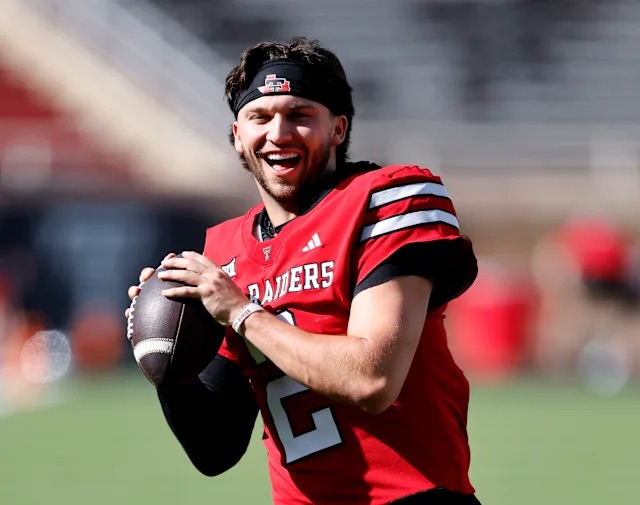
How Much Are Indiana and Cincinnati to Blame for the Brendan Sorsby Situation at Texas Tech?
The Brendan Sorsby controversy has become one of the biggest stories in college athletics, creating a showdown involving the NCAA, Texas Tech, the Big 12 Conference, state attorneys general, and university leaders across the country. At the center of the controversy is a quarterback who admitted to gambling violations while a college athlete and who later received a court injunction allowing him to play at Texas Tech despite an NCAA ruling declaring him ineligible.
As the fallout continues, many people are directing their anger toward Texas Tech. Others blame the NCAA for failing to handle gambling cases consistently. But another question deserves attention: How much responsibility belongs to Indiana and Cincinnati, the two schools where Sorsby played before transferring to Texas Tech?
The answer is not simple. Neither school created the gambling problem, and neither school forced Sorsby to place bets. Ultimately, personal accountability matters. However, both institutions were in positions to identify warning signs and potentially intervene before the situation escalated into a national scandal.
Indiana’s Accountability
Indiana deserves the larger share of criticism.
According to court records and reports, Sorsby admitted to placing wagers while he was at Indiana, including bets involving Indiana football. Those actions occurred during his time with the Hoosiers and formed the foundation of the NCAA’s eventual decision to declare him permanently ineligible.
That naturally raises questions. How did a student-athlete allegedly place thousands of wagers over an extended period without significant intervention? How did betting activity continue long enough to become a major eligibility issue years later?
No university can monitor every action of every athlete. That is unrealistic. But colleges spend millions on compliance departments, sports psychology services, academic monitoring, and athlete support systems. Gambling education has become a major priority across college athletics because of the explosion of legalized sports betting nationwide.
If Sorsby’s gambling activity began while he was at Indiana, then Indiana has to accept some criticism for failing to identify the problem sooner.
That does not mean Indiana is responsible for the bets. Sorsby made those decisions himself. But universities routinely claim they are committed to athlete wellness and mental health. If the gambling problem was developing during his time in Bloomington, it is fair to ask whether enough safeguards were in place.
Cincinnati’s Accountability
Cincinnati’s role is different but still significant.
By the time Sorsby arrived at Cincinnati, the college sports landscape had become even more focused on gambling education and integrity. Yet reports indicate that additional wagering activity allegedly occurred during his time with the Bearcats.
If those reports are accurate, then Cincinnati also missed opportunities to detect and address a growing problem.
What makes Cincinnati’s situation particularly complicated is that the university later filed litigation related to Sorsby’s transfer to Texas Tech and the financial obligations connected to his NIL agreement.
From Cincinnati’s perspective, the school likely feels it fulfilled its obligations and was harmed by the transfer. But critics could argue that if gambling concerns existed during his time in Cincinnati, the school should have been more proactive before the issue exploded publicly.
Sorsby’s Actions
Still, assigning blame to Indiana and Cincinnati should not become an attempt to excuse Sorsby’s actions.
The NCAA’s position remains straightforward. Athletes are repeatedly educated about gambling restrictions. Betting on your own team has historically been considered one of the most serious violations in sports because it threatens competitive integrity. Reports indicate that Sorsby admitted to betting on Indiana football games while he was associated with the program.
That reality explains why so many administrators across college athletics reacted so strongly when a Texas court granted an injunction allowing him to play.
One Big 12 administrator, quoted by Yahoo Sports, summarized the frustration by saying the ruling was “bulls***.”
Kansas State athletic director Gene Taylor was also among those expressing concern about the precedent being created, arguing that gambling violations have historically carried severe consequences and that the integrity of college sports is at stake.
The broader concern is not simply about one quarterback. It is about whether schools, conferences, and governing bodies can enforce rules consistently.
Texas Tech argues that it is supporting a student-athlete who has undergone treatment and is working through a gambling addiction. Athletic director Kirby Hocutt stated, “Our role has been to support his recovery, not engineer his eligibility.”
That is a reasonable position. Universities should help athletes dealing with addiction.
Accountability For All Concerned
But support and accountability are not mutually exclusive.
If anything, the Sorsby situation demonstrates that college athletics still lacks a comprehensive system for identifying gambling issues before they become career-defining scandals.
Indiana had opportunities.
Cincinnati had opportunities.
The NCAA had opportunities.
Even college athletics as a whole had opportunities.
Assigning percentages of blame is difficult, but if Texas Tech deserves criticism for embracing the legal pathway that restored Sorsby’s eligibility, then Indiana and Cincinnati deserve scrutiny for what occurred before he ever arrived in Lubbock.
My view is that Indiana bears the most responsibility outside of Sorsby himself because the conduct that triggered the controversy appears to have originated there. Cincinnati deserves some criticism if additional warning signs existed during his time in the program. But neither school should be portrayed as the primary villain.
At the end of the day, this remains a story about individual choices and institutional failures intersecting in the worst possible way.
Sorsby made the decisions.
Indiana and Cincinnati may have missed warning signs.
The NCAA attempted to enforce its rules.
Texas Tech found a legal avenue to challenge the punishment.
Now the Big 12 is fighting to protect what it views as the integrity of its membership and competitive standards.
That is why this controversy continues to dominate headlines. It is no longer just about one quarterback. It is about whether college sports can effectively police gambling violations in an era where courts, conferences, schools, and athletes are all battling for power.
And in that larger story, Indiana and Cincinnati are not innocent bystanders. They are part of the chain of events that helped create one of the most controversial eligibility disputes college football has ever seen.
Michael J. Wilson-The Daily Waiver
Email: Dailywaiver@gmail.com Instagram: @Dailywaiver Tik-Tok: @Dailywaiver