Pac-12 is a Reinvented Survivor: What Can We Expect?
The idea that the Pac-12 is simply “back” in 2026–2027 is technically true—but it’s also deeply misleading. What’s returning isn’t the same power conference that once featured USC, Oregon, and Washington battling for national titles. Instead, what we’re about to see is one of the most fascinating experiments in modern college athletics: a proud brand trying to reinvent itself in a completely different tier of college sports.
And whether that experiment is “successful” depends entirely on how you define success.
The Reality: This is a Rebuilt, not Restored, Pac-12
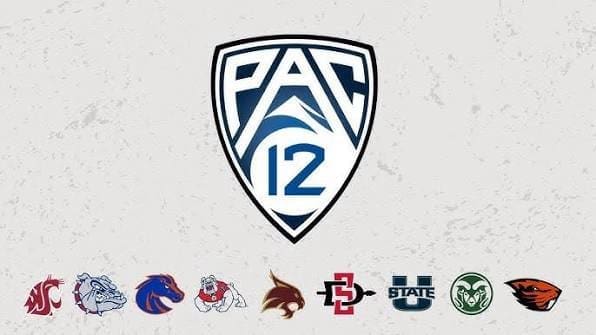
Let’s start with the facts. The new Pac-12 will feature programs like Boise State, San Diego State, Fresno State, Utah State, Colorado State, Texas State, along with holdovers Oregon State and Washington State.
That’s a solid group—but it’s not a traditional power conference lineup. The league lost 10 of its 12 original members during the realignment chaos of 2024, with those schools dispersing into the Big Ten, Big 12, and ACC.
So the question isn’t whether the Pac-12 will return to its former glory—it won’t. The real question is whether this new version can carve out a meaningful and sustainable place in the college sports ecosystem.
Success starts with Survival—and the Pac-12 has already achieved that
Two years ago, the Pac-12 was essentially dead. Down to just Oregon State and Washington State, it looked like the conference would dissolve entirely.
Instead, it did something few expected: it rebuilt quickly and strategically.
By adding top programs from the Mountain West—many of which have dominated their previous conference—the Pac-12 ensured immediate competitiveness. These incoming schools have combined for a large share of recent Mountain West success, including multiple championships and consistent bowl appearances.
Even more importantly, the conference maintained its status as an FBS league and retained access to the College Football Playoff and NCAA tournament automatic bids.
That alone qualifies as a win.
Because in today’s college sports landscape, survival is step one—and the Pac-12 cleared that hurdle when many expected it to fail.
But make no mistake: This is a “Group of Five-plus” Conference
Here’s where reality sets in.
The new Pac-12 will not be treated like the SEC, Big Ten, or even the Big 12 in terms of revenue distribution or national perception.
Instead, it will operate in a space somewhere between a traditional “Power Five” league and the best of the Group of Five.
That’s not necessarily a bad thing—but it does redefine what success looks like.
If you expect this conference to produce national title contenders regularly, you’re going to be disappointed. But if you evaluate it as a top-tier mid-major league with strong brands and competitive football, the outlook becomes much more positive.
On the Field: Surprisingly Competitive
One of the most underrated aspects of the new Pac-12 is just how competitive it could be.
Boise State enters as the flagship program, with projections already placing it near the top of the league and capable of double-digit wins.
San Diego State and Fresno State aren’t far behind, both bringing recent success and strong rosters.
Even programs like Texas State and Washington State add intrigue, with upward trajectories and the potential to disrupt the hierarchy.
This isn’t a weak conference—it’s a balanced one.
And that balance could actually become a strength. Unlike top-heavy leagues dominated by two or three powers, the Pac-12 may offer weekly parity, competitive games, and legitimate conference races.
That’s good for television. It’s good for fan engagement. And it’s good for the league’s long-term viability.
Media Rights and Exposure: Quietly a Big Win
Another reason for optimism is the Pac-12’s media strategy.
The conference has secured a deal that includes national broadcasts through networks like The CW, with dozens of football and basketball games set to air annually through the end of the decade.
That might not sound like a major victory compared to billion-dollar deals from the Big Ten or SEC—but context matters.
For a conference that was on the brink of extinction, securing consistent national exposure is a huge step forward.
It ensures visibility for recruits. It keeps the brand relevant. And it provides a stable financial foundation—something the old Pac-12 struggled with in its final years.
The Biggest Challenge: Perception
Here’s the harsh truth: perception will be the Pac-12’s biggest obstacle.
Fair or not, this conference will be viewed as a step down from the old Pac-12. Recruits, media analysts, and fans will compare it to what it used to be, not what it is now.
That’s a losing battle.
Instead, the conference needs to redefine its identity.
If it embraces being the best non-power conference—or the “sixth power league”—it can build something sustainable. But if it constantly tries to measure itself against the SEC or Big Ten, it will always fall short.
Long-Term Outlook: Stable, not Dominant
So how successful will the Pac-12 be in 2026–2027?
It won’t dominate college football. It won’t command massive TV revenue. And it won’t consistently send teams to the national championship.
But it will be stable.
It will produce competitive teams, likely earn playoff access in expanded formats, and remain nationally relevant. It will give programs like Boise State and San Diego State a bigger stage, while keeping West Coast football alive in a meaningful way.
And in today’s chaotic college sports environment, that’s more than enough.
Final Verdict
The new Pac-12 won’t be a powerhouse—but it doesn’t need to be.
Success for this conference isn’t about returning to the past. It’s about building a new identity, maintaining relevance, and creating a competitive, entertaining product.
And by those standards, the Pac-12 in 2026–2027 has a real chance to succeed—not as a resurrected giant, but as a reinvented survivor.
Michael J. Wilson-The Daily Waiver
Email: Dailywaiver@gmail.com Instagram: @Dailywaiver Tik-Tok: @Dailywaiver